Now Available!
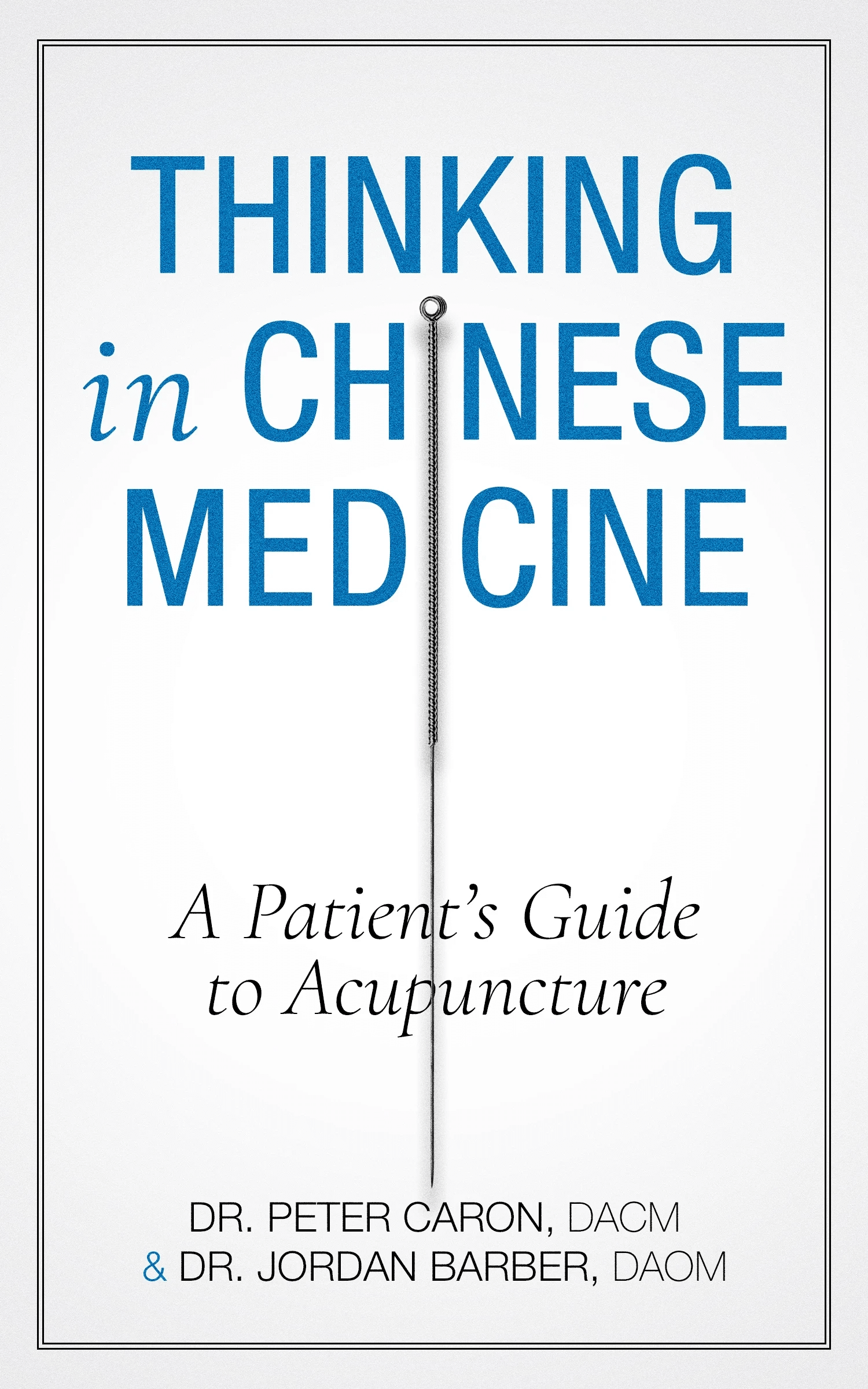
Thinking In Chinese Medicine Book

Thinking in Chinese Medicine

A clear, practical framework for understanding the body through patterns, relationships, and change.
Chinese medicine is often presented as abstract or symbolic. In practice, it is a structured way of reasoning through complex clinical presentations. This book shows how that thinking works and how it applies in real life.

What Purpose This Book Serves

Most introductions to Chinese medicine focus on terminology, points, or theory in isolation. What's usually missing is how it comes together in practice.
This book focuses on the thinking process itself. How patterns are identified. How relationships between systems are interpreted. How a clinician moves from observation to decision.
The goal is not to simplify the medicine into something it is not. It is to make the logic behind it visible and usable.

Core Themes Of The Book

Patterns, Not Label

Symptoms are understood as part of a pattern rather than a standalone problem.

Systems in Relationship

No system operates independently. What you are seeing is always influenced by something else.

Reasoning Over Protocol

This is not about applying formulas. It is about understanding what is happening well enough to respond appropriately.

Change Matters

Timing, progression, and context often matter more than the symptom itself.

Who Is This Book For

For Patients

If you feel like you have been given explanations but no real understanding, this provides a way to organize what you are experiencing.
If you want to be more informed in your care without needing to become an expert, this meets you there.

For Practitioners

If you have learned the material but still feel like you are assembling pieces without a clear framework, this clarifies how the system functions in practice.
If you rely on protocols but want to think more fluidly, this gives you that structure.

A Different Way of Looking at the Body

In Chinese Medicine, symptoms are not isolated issues. They are expressions of how the body is adapting, compensating, or struggling within a network of relationships.
That relationship matters. Once the pattern of relationships is clear, the next step is no longer guesswork.
This perspective does not replace modern medicine. It runs alongside it, offering another level of interpretation that can change how decisions are made.

About the Authors

Dr. Jordan Barber

Dr. Jordan Barber is a clinician with over two decades of experience, with a current clinical focus on pain, neuromuscular dysfunction, and pelvic floor disorders. His work emphasizes precise, mechanism-based treatment grounded in anatomy and physiology.
Learn more about Dr. Jordan Barber

Dr. Peter Caron

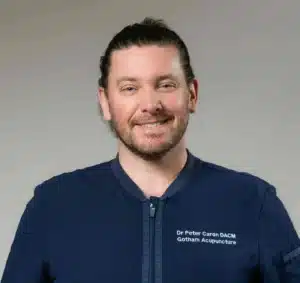
Dr. Peter Caron is a doctor of acupuncture and educator known for translating classical Chinese medical concepts into clear, clinically useful reasoning frameworks.
Learn more about Dr. Peter Caron

Frequently Asked Questions

This book is written primarily for patients who feel overwhelmed by conflicting explanations about their health and want a clearer way to think about what is happening in their bodies. It is also for students who want to understand how Chinese medicine organizes information and makes decisions, rather than memorizing categories or techniques.

Many people are not missing information. They are missing orientation. They have too many explanations and no way to understand how those explanations relate to each other. This book offers a way of seeing the body that helps readers understand patterns, relationships, and change over time without pretending there is a single root cause.

No. A central idea in the book is that no single medical system explains the whole person. Chinese medicine is presented as one useful map among others. The value is not in replacing other explanations, but in adding a way to notice relationships, priorities, and patterns that are otherwise easy to miss.

No. Tools are mentioned, but they are not the focus. The book is about the thinking behind Chinese medicine: how clinicians decide what matters, how they choose where to intervene, and how they adjust based on what actually changes. It is about judgment, not recipes.

No. The book treats traditional terms as practical language, not beliefs. Concepts like Qi or organ systems are explained as ways of describing function and relationship, not literal substances. The emphasis is on whether a way of thinking helps you understand what is happening, not on whether you accept a theory.

Most readers come away with a calmer, clearer understanding of their bodies and their care. Not certainty, and not a diagnosis, but a better sense of what questions matter, why symptoms cluster, and how to think when the body does not behave in simple or linear ways.

Start Thinking Differently About Health

When the framework changes, the decisions that follow tend to change with it.
Purchase The Book

Thinking In Chinese Medicine is Published by Dymphna Publishing